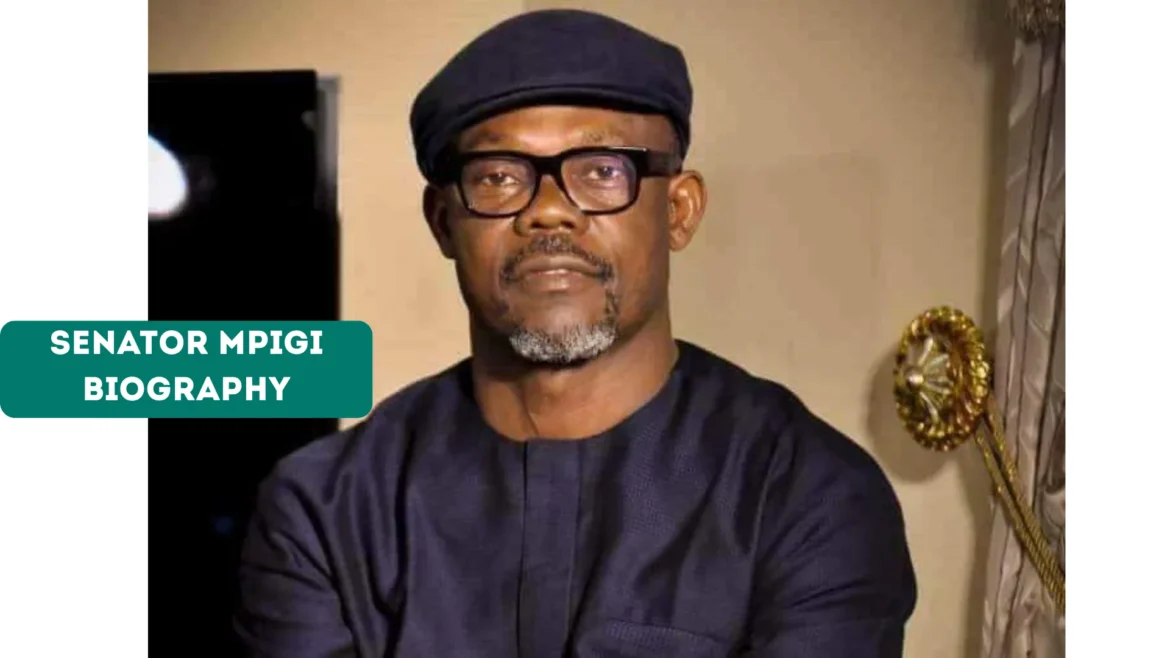
Barinada Barinada Mpigi was born on June 23, 1961, in Rivers State. He hailed from Tai Local Government Area, an area populated predominantly by the Ogoni people. His upbringing in a community deeply connected to grassroots livelihoods and regional challenges helped shape his political instincts and commitment to improving lives.
His early experiences among hardworking families in Rivers State instilled in him a passion for public service and community development, both of which would define his political career for decades.
Education and Early Career
Details about Mpigi’s primary and secondary education are limited in public records, but it is known that he pursued higher learning that equipped him with the tools to engage effectively in governance and public administration. By the time he entered politics, Mpigi had developed a reputation as an articulate, community-oriented leader capable of navigating complex political environments.
Entry Into Politics
Senator Mpigi’s political career began at the grassroots level. Before making his mark on the national stage, he served the people of Tai Local Government Area in various capacities — including as Local Government Chairman, a role that enabled him to directly impact local development projects, infrastructure, and community empowerment programs.
His tenure in local leadership was characterized by hands-on management of rural electrification, road rehabilitation, water projects, and small-business empowerment initiatives, which cemented his reputation as a leader who delivered tangible results for his people.
Rise to National Leadership
House of Representatives (2011–2019)
Mpigi’s success on the local political stage propelled him to the National Assembly. In 2011, he was elected to the House of Representatives, representing the Eleme/Tai/Oyigbo Federal Constituency. He was re-elected in 2016, serving two terms where he focused on legislative advocacy and constituency development.
During this time, he became known for his strong voice on issues affecting his community, particularly around infrastructural deficits, youth development, and resource equity for the Niger Delta region.
Senate Career (2019–2026)
In 2019, Mpigi made the leap to the Senate, representing Rivers South-East Senatorial District under the Peoples Democratic Party (PDP) banner. He was re-elected in 2023, reflecting the confidence his constituents placed in his leadership.
As Senator, he held several influential positions:
-
Chairman of the Senate Committee on Works, overseeing federal infrastructure and public works initiatives.
-
Chair of a Joint Senate Committee investigating crude oil theft in the Niger Delta region during the Ninth Assembly.
His legislative influence extended to debates on national infrastructure budgets, oversight of federal projects, and advocacy for better living conditions for the people in the South-East Senatorial region.
Major Achievements and Contributions
Infrastructure and Development
Under his leadership of the Senate Committee on Works, Mpigi championed oversight on federal road projects, aiming to improve transportation and economic connectivity in his region. His advocacy was essential in ensuring accountability in the execution of major road contracts and public works.
Legislative Oversight and Investigations
As chair of the joint committee on crude oil theft investigations, Mpigi tackled one of the most critical issues facing the Niger Delta, advocating for stronger policy interventions to curb oil theft and environmental degradation.
Scholarship and Youth Empowerment
Throughout his career, Mpigi supported educational initiatives, including scholarship programs and postgraduate grants aimed at expanding opportunities for youth in his constituency — particularly in underdeveloped and rural areas.
Leadership Style and Public Image
Senator Mpigi was widely regarded as a grassroots champion, maintaining strong connections with his constituents and consistently pushing for development projects that directly benefited local communities. His peers described him as humble, dedicated, and committed to public service.
His ability to balance local interests with national responsibilities made him a respected figure in the Nigerian National Assembly and within Rivers State politics.
Illness and Death
On February 19, 2026, Senator Barinada Mpigi died at age 64 following a brief illness. His passing was confirmed amidst expressions of shock and sadness from political allies and state officials.
Siminalayi Fubara, Governor of Rivers State, described Mpigi as a “consummate politician” and a leading light whose experience was still needed by his people at the time of his death.
Legacy and Impact
Mpigi’s legacy is one of dedicated public service, infrastructure advocacy, and grassroots empowerment. Through his legislative roles and committee leadership, he brought attention to critical issues affecting the Niger Delta and worked to ensure that the voices of his constituents were heard in Abuja.
His commitment to education, youth empowerment, and community projects leaves a lasting imprint on the socio-economic development of Rivers South-East Senatorial District.
Frequently Asked Questions (FAQs)
Who was Senator Barinada Mpigi?
Senator Barinada Mpigi was a Nigerian politician who served as the Senator for Rivers South-East Senatorial District until his death in February 2026.
What political offices did he hold?
He served in the House of Representatives (2011–2019) and the Senate (2019–2026), including as Chairman of the Senate Committee on Works.
What were his major achievements?
Mpigi led infrastructure oversight, championed anti-oil theft initiatives, supported scholarships, and empowered youth in his constituency.
How did he impact Rivers State politics?
He fostered strong grassroots engagement, advocated for development projects, and reinforced the role of Rivers South-East Senatorial District in the federal legislative process.
When did he pass away?
Senator Mpigi died on February 19, 2026, at the age of 64.
Conclusion
Senator Barinada Mpigi’s life and career embody the essence of committed public service. Rising from local leadership to national prominence, he championed development, accountability, and empowerment for his constituents. His legacy will continue to influence Rivers State politics and serve as an example for future Nigerian leaders.