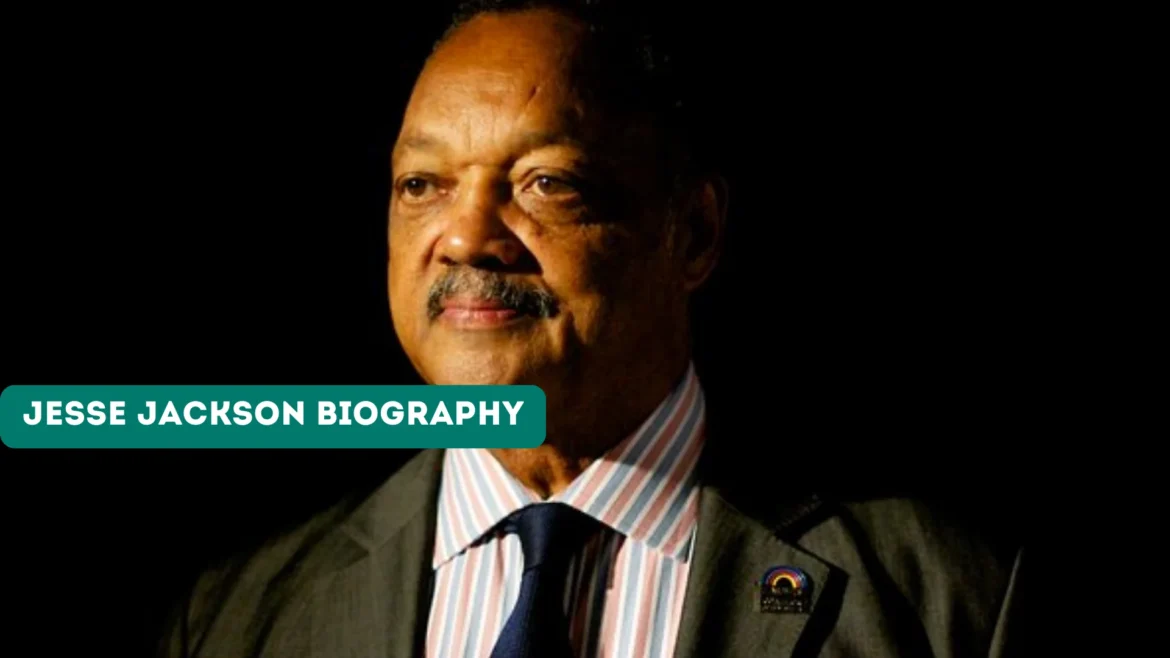
Jesse Jackson is one of the most influential civil rights leaders in modern American history. Known for his powerful oratory, tireless activism, and historic presidential campaigns, Jackson has spent more than six decades fighting for racial equality, economic justice, human rights, and political empowerment.
His work helped transform the civil rights movement from street-level protest into sustained political engagement that reshaped American democracy.
From marching alongside Martin Luther King Jr. to founding major civil rights organizations and running for president of the United States, Jackson’s life reflects the struggle, resilience, and progress of African Americans in the 20th and 21st centuries.
Early Life
Jesse Jackson was born on October 8, 1941, in Greenville, South Carolina, during the height of racial segregation in the United States. He was born Jesse Louis Burns and later adopted the surname Jackson from his stepfather, Charles Jackson.
Growing up in the Jim Crow South deeply shaped Jackson’s worldview. He experienced racial discrimination firsthand, including segregated schools, limited opportunities, and systemic injustice. Despite these challenges, Jackson excelled academically and athletically, becoming a standout student and football player in high school.
His early exposure to inequality ignited a lifelong passion for justice and equality, motivating him to pursue education as a pathway to leadership and social change.
Education and Early Leadership
Jesse Jackson attended the University of Illinois at Urbana–Champaign on a football scholarship, where he studied sociology. He later transferred to North Carolina Agricultural and Technical State University (North Carolina A&T), a historically Black university, where he earned a Bachelor of Science degree in sociology in 1964.
Jackson continued his education at the Chicago Theological Seminary, where he pursued graduate studies and later received a Master of Divinity degree. Although he did not complete his degree immediately, he eventually earned it in 2000, demonstrating his lifelong commitment to learning and faith.
During his college years, Jackson became increasingly involved in civil rights activism, organizing student protests and participating in demonstrations against segregation and discrimination.
Role in the Civil Rights Movement
Jesse Jackson rose to national prominence during the 1960s civil rights movement. He worked closely with Dr. Martin Luther King Jr. and became a key figure in the Southern Christian Leadership Conference (SCLC).
Jackson was present during many pivotal moments of the movement, including voter registration drives, economic justice campaigns, and mass demonstrations. He was also reportedly present at the Lorraine Motel in Memphis on April 4, 1968, when Dr. King was assassinated—an event that profoundly affected him and reinforced his commitment to continue King’s mission.
After King’s death, Jackson founded Operation PUSH (People United to Save Humanity) in 1971. The organization focused on economic empowerment, education, and social justice for African Americans and marginalized communities.
Founding of the Rainbow Coalition
In 1984, Jesse Jackson expanded his vision by founding the National Rainbow Coalition, later merging it with Operation PUSH to form the Rainbow/PUSH Coalition. The organization aimed to unite diverse racial, ethnic, religious, and economic groups under a shared agenda of equality and justice.
The Rainbow Coalition advocated for:
- Voting rights and political participation
- Economic justice and job creation
- Educational access and equity
- Fair treatment of minorities and the poor
This inclusive approach helped redefine progressive politics in the United States and broadened the base of civil rights activism.
Historic Presidential Campaigns
Jesse Jackson made history by running for President of the United States in 1984 and 1988 as a Democratic candidate. His campaigns were groundbreaking, as he became the first African American to mount a serious, nationally competitive presidential bid.
In 1984, Jackson’s campaign focused on social justice, civil rights, and opposition to economic inequality. Though he did not win the nomination, he gained millions of votes and demonstrated the political power of minority and progressive voters.
The 1988 campaign was even more successful. Jackson won several Democratic primaries and caucuses, secured millions of votes, and finished second overall in the delegate count. His campaign energized young voters, minorities, and working-class Americans, paving the way for future leaders of color in national politics.
Political Influence and Advocacy
Although Jesse Jackson never held elected office, his influence on American politics has been profound. He played a key role in increasing African American voter registration and turnout, shaping Democratic Party platforms, and advocating for progressive policies.
Jackson has been a vocal advocate for:
- Civil and human rights
- Labor unions and workers’ rights
- International peace and diplomacy
- Prison reform and social justice
He has also engaged in international diplomacy, negotiating the release of political prisoners and hostages in countries such as Syria, Cuba, and Iraq.
Controversies and Criticism
Like many public figures, Jesse Jackson’s career has not been without controversy. Over the years, he has faced criticism for certain political statements, personal scandals, and questions about leadership style.
Despite these challenges, Jackson has remained a respected figure within civil rights circles and continues to be recognized for his decades-long commitment to justice and equality.
Health Challenges and Later Life
In 2017, Jesse Jackson announced that he had been diagnosed with Parkinson’s disease. Since then, he has gradually stepped back from public appearances while continuing to support civil rights causes.
Even in later life, Jackson’s influence endures through the organizations he founded, the leaders he mentored, and the movements he helped inspire.
Legacy and Impact
Jesse Jackson’s legacy is one of courage, perseverance, and transformative leadership. He helped bridge the gap between civil rights activism and electoral politics, proving that marginalized communities could demand not only equality but also political power.
His presidential campaigns opened doors for future leaders and contributed to the eventual election of Barack Obama in 2008. Jackson’s vision of a “Rainbow Coalition” remains a guiding principle for progressive movements seeking unity across lines of race, class, and faith.
FAQs
Q1: Who is Jesse Jackson?
Jesse Jackson is an American civil rights leader, Baptist minister, political activist, and former presidential candidate.
Q2: When was Jesse Jackson born?
He was born on October 8, 1941, in Greenville, South Carolina.
Q3: What organizations did Jesse Jackson found?
He founded Operation PUSH and the Rainbow/PUSH Coalition.
Q4: Did Jesse Jackson run for president?
Yes, he ran for president in 1984 and 1988 as a Democratic candidate.
Q5: What is Jesse Jackson’s legacy?
His legacy includes advancing civil rights, expanding political participation, and inspiring future generations of leaders.
Conclusion
Jesse Jackson stands as a towering figure in American history whose life reflects the ongoing struggle for justice and equality. From the segregated South to the national political stage, his journey embodies the power of activism, faith, and perseverance. While debates about his methods and decisions continue, there is no denying that Jesse Jackson reshaped the landscape of civil rights and progressive politics in the United States. His work remains a vital part of America’s continuing quest for freedom and equality for all.