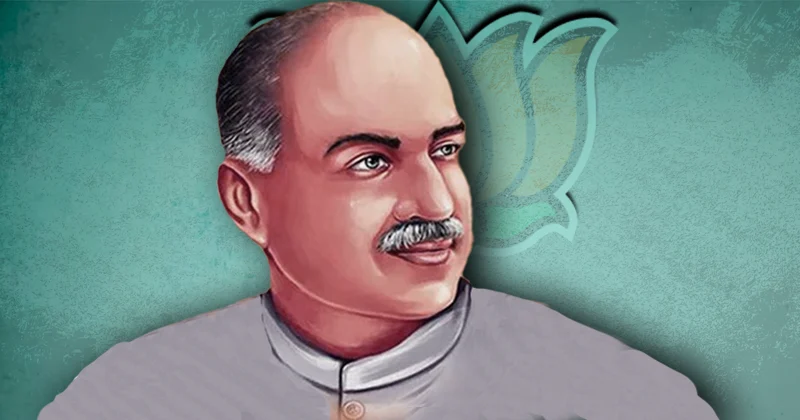
Dr. Shyama Prasad Mukherjee was a distinguished Indian politician, barrister, educationist, and nationalist leader who played a significant role in shaping modern India. He is best known as the founder of the Bharatiya Jana Sangh, the political organization that later evolved into the modern-day Bharatiya Janata Party (BJP).
A visionary leader, Dr. Mukherjee made remarkable contributions to education, politics, and national integration. Throughout his life, he worked tirelessly for India’s unity, cultural identity, and democratic values. His dedication to public service and unwavering commitment to national interests earned him a respected place in Indian history.
This comprehensive biography explores his early life, education, political journey, achievements, personal life, and enduring legacy.
Profile
| Full Name | Shyama Prasad Mukherjee |
|---|---|
| Popular Name | Dr. Shyama Prasad Mukherjee |
| Date of Birth | July 6, 1901 |
| Place of Birth | Calcutta (now Kolkata), India |
| Nationality | Indian |
| Profession | Politician, Barrister, Educationist |
| Political Party | Bharatiya Jana Sangh (Founder) |
| Father’s Name | Sir Ashutosh Mukherjee |
| Mother’s Name | Jogmaya Devi |
| Date of Death | June 23, 1953 |
| Known For | Founder of Bharatiya Jana Sangh, National Integration Advocate |
Early Life
Dr. Shyama Prasad Mukherjee was born on July 6, 1901, in Kolkata, West Bengal, into a highly respected and educated Bengali family.
His father, Sir Ashutosh Mukherjee, was a renowned educator, mathematician, and judge who served as the Vice-Chancellor of the University of Calcutta. His mother, Jogmaya Devi, played an important role in nurturing his values and character.
Growing up in an intellectually stimulating environment, Shyama Prasad developed a passion for learning, leadership, and public service from an early age.
Education
Dr. Mukherjee was an exceptionally brilliant student.
He completed his early education in Kolkata and consistently excelled academically. After graduating with distinction, he pursued higher studies at the prestigious University of Calcutta.
His educational achievements include:
- Bachelor’s Degree with Honors
- Master’s Degree in Bengali Literature
- Bachelor of Law (LL.B.)
- Barrister-at-Law qualification from England
His academic excellence made him one of the most promising intellectuals of his generation.
Academic Career
Before entering politics, Dr. Mukherjee established himself as a respected academic and education administrator.
In 1934, at the age of just 33, he became the youngest Vice-Chancellor of the University of Calcutta.
During his tenure, he introduced several educational reforms aimed at improving academic standards and expanding opportunities for students.
His leadership contributed significantly to the growth and modernization of higher education in India.
Entry into Politics
Dr. Mukherjee entered politics during British rule in India.
Initially, he became involved in public affairs through educational and civic activities. His leadership abilities and commitment to national issues quickly earned him recognition among political circles.
He was elected to the Bengal Legislative Council and actively participated in discussions concerning governance, education, and public welfare.
Over time, he emerged as one of the prominent political leaders in Bengal.
Role During India’s Independence Movement
Although Dr. Mukherjee’s political views often differed from those of some other nationalist leaders, he remained deeply committed to India’s freedom and welfare.
He advocated for:
- National unity
- Cultural preservation
- Economic development
- Democratic governance
- Protection of citizens’ rights
His political contributions during the final years of British rule helped shape important discussions regarding India’s future.
Minister in Independent India
After India gained independence in 1947, Dr. Shyama Prasad Mukherjee joined the first Cabinet of Prime Minister Jawaharlal Nehru.
He served as India’s first Minister for Industry and Supply.
During his tenure, he worked to strengthen India’s industrial base and support economic development initiatives that would help the newly independent nation become self-reliant.
His efforts contributed to laying the foundation for India’s industrial growth.
Resignation from the Cabinet
Despite serving in the government, Dr. Mukherjee disagreed with certain policies adopted by the administration.
These differences eventually led to his resignation from the Cabinet in 1950.
He believed that a strong opposition was necessary for a healthy democracy and sought to provide an alternative political vision for India.
His resignation marked a turning point in his political career.
Founding of Bharatiya Jana Sangh
One of Dr. Mukherjee’s most significant achievements was the establishment of the Bharatiya Jana Sangh in 1951.
The party focused on:
- National unity
- Cultural nationalism
- Economic development
- Democratic values
- Strong national security
Under his leadership, the Bharatiya Jana Sangh quickly gained recognition as an influential political force.
The organization later evolved into the Bharatiya Janata Party (BJP), one of India’s major political parties.
Advocacy for National Integration
Dr. Mukherjee strongly believed in the complete integration of all Indian states into the Union of India.
He became particularly known for his opposition to special constitutional arrangements that, in his view, created divisions within the country.
His famous slogan emphasized the importance of one nation with equal constitutional treatment for all citizens.
This position became one of the defining aspects of his political legacy.
Personal Life
Dr. Shyama Prasad Mukherjee was married to Sudha Devi.
The couple had children and maintained a family life alongside his demanding academic and political responsibilities.
Despite his public commitments, he remained devoted to his family and personal values.
His disciplined lifestyle, intellectual pursuits, and dedication to public service earned him admiration from colleagues and supporters.
Death
Dr. Shyama Prasad Mukherjee passed away on June 23, 1953, while under detention in Jammu and Kashmir.
His death generated widespread public discussion and remains a significant event in Indian political history.
Many supporters regarded his passing as a great loss to the nation and to the political movement he had established.
Contributions and Achievements
Educational Leadership
- Youngest Vice-Chancellor of the University of Calcutta.
- Introduced important educational reforms.
- Promoted higher education development.
Political Contributions
- Served in India’s first Cabinet.
- First Minister for Industry and Supply.
- Founded Bharatiya Jana Sangh.
National Integration
- Advocated for national unity.
- Promoted constitutional equality.
- Worked for stronger national cohesion.
Democratic Values
- Strengthened opposition politics.
- Encouraged democratic debate.
- Contributed to India’s parliamentary system.
Legacy
Dr. Shyama Prasad Mukherjee’s influence continues to be felt in Indian politics and public life.
His contributions are remembered through:
- Educational institutions named in his honor.
- Government programs commemorating his work.
- Political organizations inspired by his vision.
- Scholarly studies of his contributions to Indian democracy.
Today, he is widely regarded as one of the important architects of post-independence Indian political thought.
Frequently Asked Questions (FAQs)
Who was Dr. Shyama Prasad Mukherjee?
Dr. Shyama Prasad Mukherjee was an Indian politician, educationist, barrister, and founder of the Bharatiya Jana Sangh.
When was Dr. Shyama Prasad Mukherjee born?
He was born on July 6, 1901, in Kolkata, India.
What is Dr. Shyama Prasad Mukherjee famous for?
He is famous for founding the Bharatiya Jana Sangh and advocating national integration and democratic values.
What position did he hold in independent India?
He served as India’s first Minister for Industry and Supply in the Cabinet of Prime Minister Jawaharlal Nehru.
When did Dr. Mukherjee die?
He passed away on June 23, 1953.
What is his legacy?
His legacy includes educational reforms, political leadership, advocacy for national unity, and the foundation of a political movement that influenced modern Indian politics.
Conclusion
Dr. Shyama Prasad Mukherjee was a remarkable scholar, educationist, and statesman whose contributions left a lasting impact on India. From his achievements in academia to his role in shaping the country’s political landscape, he demonstrated exceptional leadership and dedication to public service.
His vision of a united, strong, and democratic India continues to inspire generations. As a founder of Bharatiya Jana Sangh and an advocate of national integration, Dr. Mukherjee remains an important figure in India’s history whose ideas and contributions are remembered and studied to this day.