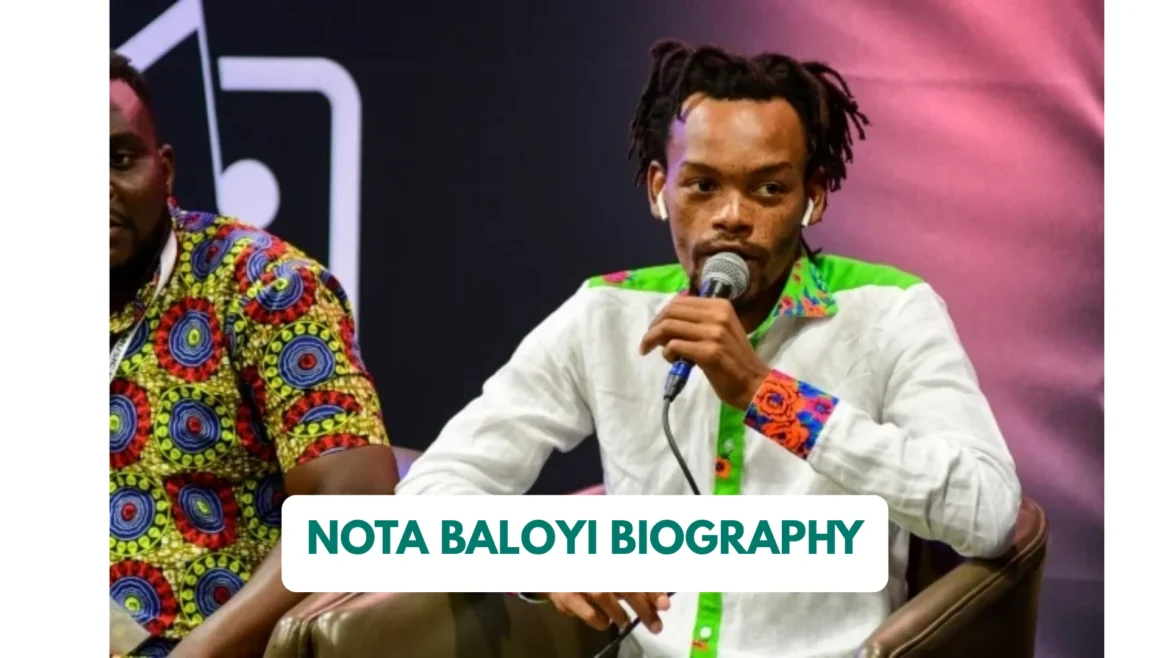
Nhlamulo “Nota” Baloyi — usually just called Nota — is one of South Africa’s most talked-about music executives and media personalities.
Known for his role in the development of South African hip-hop artists, his loud online persona, and several high-profile legal and human-rights controversies, Nota’s story is a mix of creative entrepreneurship, controversy, and influence in modern South African culture.
This biography dives into his early life, rise in the music industry, key career milestones, public controversies, personal life, and legacy.
Bio Data
- Full Name: Nhlamulo Baloyi
- Stage Name: Nota Baloyi
- Born: 20 March 1990
- Age: 35 (as of 2025)
- Birthplace: Parktown, Johannesburg, South Africa
- Nationality: South African
- Occupation: Music executive, rapper, entrepreneur
- Spouse (ex-partner): Berita (formerly married; now separated)
- Net Worth (estimated): About US $600,000
Early life and background
Nhlamulo Baloyi was born on March 20, 1990. He grew up in South Africa and has often described his upbringing in candid, colorful terms in interviews. From early on he was drawn to music and culture, which eventually led him toward a career in the music business rather than strictly as a mainstream recording artist. Many profile pages and interviews outline his early ambition to be more than just a performer — he wanted to shape the industry behind the scenes.
Breaking into the music industry
Nota’s initial public recognition came not as a chart-topping artist but as a manager and entrepreneur. He became well-known in South Africa’s hip-hop scene through roles at record labels and music companies, including positions tied to Urbantainment and associations with distribution partners. Over time he built a reputation for spotting talent and helping local hip-hop artists navigate the industry’s complexities. His involvement with rising acts gave him a platform to pivot into more visible media roles.
Career highlights and achievements
- Music executive & entrepreneur: Nota founded and led ventures that combined artist management, distribution, and media promotion. He is frequently described as the CEO or managing director of companies connected to contemporary South African urban music.
- Artist development: He played instrumental roles in the careers of several South African hip-hop artists, helping to bring them to broader attention through strategic releases and partnerships.
- Media presence: Beyond business, Nota cultivated a flamboyant public persona — as a podcast/TV guest, social-media commentator, and occasional musical performer — which amplified his influence and reach.
These achievements positioned him as a notable figure in SA’s music ecosystem, even as his public profile became increasingly polarizing.
Controversies and legal issues
Nota’s public life has also been marked by several controversies that have attracted significant media and legal scrutiny:
- Contempt of court & legal conflict with K.O: In relation to the highly publicised aftermath of rapper AKA’s death and the surrounding online speculation, Nota was found guilty of contempt of court and in 2023 was sentenced by a Johannesburg court to 60 days’ imprisonment for breaching a court order related to sharing certain information online. This event marked one of the early, notable legal setbacks in his public life.
- SAHRC proceedings and apology: The South African Human Rights Commission (SAHRC) has taken an active interest in certain public statements made by Nota. In 2025 the SAHRC instituted Equality Court proceedings related to alleged hate speech and later reported receiving unconditional apologies connected to those findings. These proceedings highlighted tensions between freedom of expression, social-media speech, and South Africa’s equality laws.
- Visa revocation (United States): In October 2025, the U.S. Department of State announced that the visas of several foreigners were revoked after social-media posts were deemed to celebrate the assassination of U.S. conservative commentator Charlie Kirk. Nota was named among those whose U.S. visas were revoked, sparking fresh debate over online speech, international consequences, and targeted diplomatic action. Nota publicly defended his actions as political speech, while critics argued the posts crossed a line.
These controversies transformed him from an industry insider into a polarising public figure — admired by some for his confrontational style and business acumen, and criticised by others for racially inflammatory and legally problematic statements.
Persona and public image
Nota is deliberately provocative online. He utilizes social platforms to voice strong opinions about South African politics, race, and the music industry. For supporters, his forthrightness and willingness to challenge establishment figures are part of his appeal. For detractors, his remarks have sometimes been inflammatory, leading to public admonitions and legal action. His approach demonstrates the power and peril of influencer-style media presence in a modern democratic society.
Personal life
Public sources indicate that Nota keeps certain personal details semi-private, although some profiles and interviews offer glimpses into his family life and relationships. Reports have at times mentioned a marriage and family elements, and his social feeds regularly display a mix of professional promotion, lifestyle content, and political commentary. Because personal details can change and may be reported differently across outlets, readers should treat private-life specifics with caution.
Business ventures and influence
Beyond artist management, Nota has been linked to companies engaged in distribution and label partnerships. His business moves show a pattern: leverage talent relationships to build distribution arrangements and media properties that amplify artists’ reach. He has been cited as an influential behind-the-scenes player who helped modernize aspects of South African hip-hop distribution and promotion. This influence, however, is now mixed with the reputational costs of his public controversies.
Legacy and where things stand now
Nota Baloyi’s legacy is undecided and will likely be debated for years. On one hand, he contributed materially to South African hip-hop’s infrastructure and helped develop talent. On the other, his public statements and resulting legal and diplomatic consequences have complicated his narrative. Whether he is remembered primarily as a music entrepreneur, a social-media provocateur, or both will depend on his future choices, legal outcomes, and how the industry and public revisit his contributions. Recent events (legal rulings, SAHRC actions, visa revocation) have added fresh chapters to his biography that continue to unfold.
FAQs — Frequently Asked Questions
Who is Nota Baloyi?
Nhlamulo “Nota” Baloyi is a South African music executive, entrepreneur, and media personality known for artist development, label leadership, and a bold public persona.
When was Nota Baloyi born?
Multiple profiles list his birthdate as March 20, 1990.
What businesses is Nota associated with?
He’s been linked to Urbantainment and other companies involved in artist management, distribution, and urban music promotion.
Has Nota Baloyi faced legal action?
Yes — including contempt of court sentencing related to online disclosures and Equality Court/SAHRC proceedings tied to allegations of hate speech.
Did the U.S. revoke Nota’s visa?
The U.S. Department of State listed Nota among the foreigners whose visas were revoked in October 2025 due to social-media posts connected to the celebration of Charlie Kirk’s assassination.
What is Nota’s impact on South African music?
He has been influential in shaping parts of the SA hip-hop scene through artist development and distribution roles, though his public controversies have complicated his legacy.
Conclusion
Nota Baloyi’s life so far is a portrait of modern influence: entrepreneurial success in a creative industry, coupled with the lightning-rod visibility of social media. He helped shape careers and contributed to South Africa’s urban music ecosystem, but his career is now inseparable from the controversies and legal disputes that followed his public statements. Whether you admire him, disapprove of him, or find him a complicated mix of both, Nota’s story is a clear example of how cultural influence, digital platforms, and legal boundaries intersect in the 21st century.