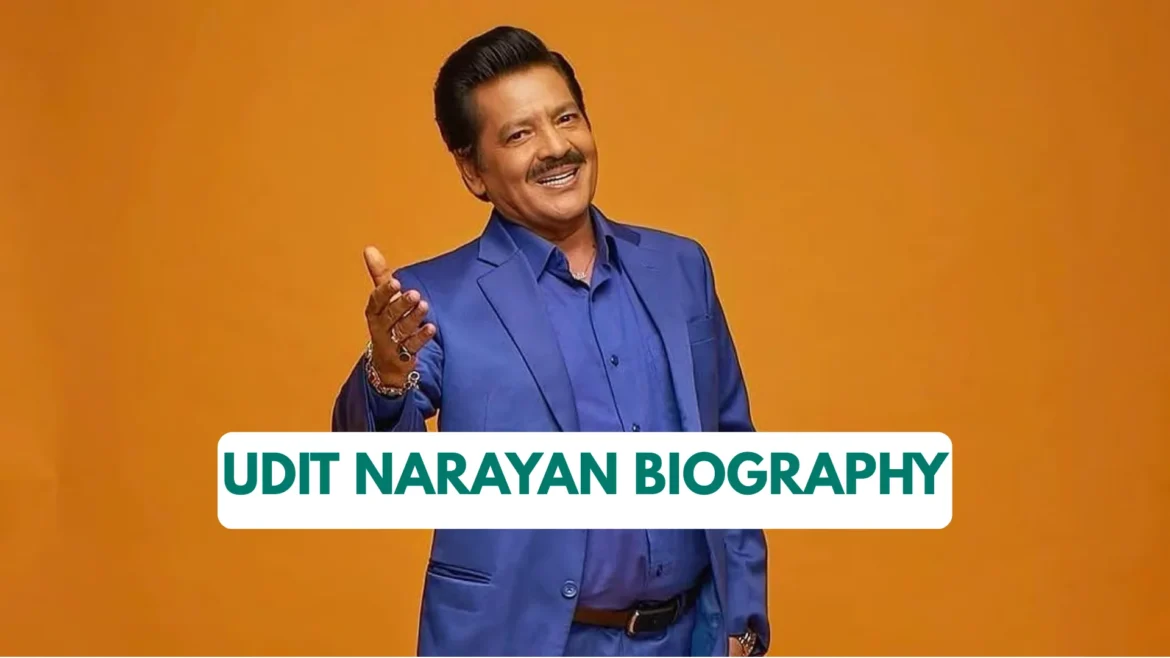
Udit Narayan Jha is one of the most recognisable and beloved playback singers in Indian cinema. With a voice that defined romance and emotion across the 1980s, 1990s and beyond, he bridged regional traditions and mainstream Bollywood melodrama to create songs that remain staples today.
From humble beginnings to national honours like the Padma Shri and Padma Bhushan, his story is a classic tale of talent meeting perseverance.
Early Life and Background
Udit Narayan was born Udit Narayan Jha on December 1, 1955. He hails from a Maithil family with deep cultural roots in the India–Nepal border region. His mother, Bhuvaneshwari, encouraged his musical interest early on; his father, Harekrishna, came from a farming background. Growing up near the border, Udit Narayan absorbed multilingual folk traditions—Maithili, Bhojpuri and Nepali—that later gave his music a rare versatility.
Musical Training and Move to Mumbai
As a teenager he performed on Radio Nepal and worked as a staff singer, gaining hands-on studio and stage experience. In the late 1970s he received a scholarship that enabled him to move to Mumbai (then Bombay) and study classical music formally at Bhartiya Vidya Bhavan. Those years of training, auditions, and persistence set the stage for the breakthrough that would come in the 1980s.
Struggle and Breakthrough
Like many performers who find success later, Udit Narayan’s early years in Mumbai were full of auditions and small jobs. His Hindi playback debut happened in 1980, and his nationwide breakthrough came with the 1988 film Qayamat Se Qayamat Tak — the romantic anthem “Papa Kehte Hain” catapulted him into the spotlight and won him his first Filmfare Award. From that point his voice became the default for a generation of romantic heroes.
Career Highlights and Style
Udit Narayan’s voice is known for its clarity, warmth and emotive phrasing—qualities that made him ideal for romantic ballads, soft duets and light semi-classical numbers. He worked with many leading music directors of the era, including Jatin–Lalit, Nadeem–Shravan, A. R. Rahman, and Anu Malik. Some hallmark songs include romantic hits and chart-toppers from films like Jo Jeeta Wohi Sikandar, Dil, Kaho Naa… Pyaar Hai, and many others. He also sang in a remarkable number of Indian and regional languages—Hindi, Nepali, Tamil, Telugu, Kannada, Bengali, Marathi, Malayalam, Assamese, Bhojpuri and more—making him truly pan-Indian in reach.
Awards and Recognition
Udit Narayan’s contribution to film music has been acknowledged with numerous awards. He has won several Filmfare Awards and National Film Awards, and the Government of India honoured him with the Padma Shri in 2009 and the Padma Bhushan in 2016 for his contribution to the arts. Internationally and within the industry he has received many other accolades and titles that celebrate his role as a leading playback singer.
Family and Personal Life
Udit Narayan’s son, Aditya Narayan, followed a musical and entertainment path of his own—establishing himself as a singer, TV host, and actor. Udit Narayan has often spoken of family as his backbone, and his wife Deepa has collaborated with him on non-film albums in Nepali and devotional music. Despite public interest, Udit Narayan has largely maintained a private life outside his stage and studio presence.
Notable Collaborations
Across decades, Udit Narayan sang duets with legendary female vocalists such as Lata Mangeshkar, Asha Bhosle, Alka Yagnik and Kavita Krishnamurthy. His collaborations with male singers like Kumar Sanu and Sonu Nigam also resulted in ensemble hits. On the composer side, his ability to adapt to styles—from the orchestral melodrama of the 1990s to modern arrangements—kept him relevant across eras.
Controversies and Citizenship Questions
At various points, questions surfaced in media around Udit Narayan’s birthplace and citizenship because of his cross-border family roots. Udit Narayan has clarified his own position multiple times, stating that he was born in Bihar at his maternal grandparents’ home and that his cultural identity spans both sides of the border. These debates did not overshadow his musical legacy, but they did bring attention to the complex histories of borderland families.
Later Career and Ongoing Influence
Even after the peak years, Udit Narayan continued singing for films, special projects and live concerts. He has occasionally re-recorded classics, lent his voice to remixes, and contributed to film songs in later decades—showing a commitment to evolving while remaining true to the melodic core of his style. Younger singers often cite him as inspiration for phrasing and emotional honesty in playback singing.
Legacy
Udit Narayan’s legacy lies in a body of songs that span genres and languages, and in a voice that became synonymous with a certain brand of romantic expression in Indian cinema. His life story—from regional radio to national honours—is a reminder that musical talent, when combined with perseverance, can cross cultural and linguistic boundaries to become timeless.
Frequently Asked Questions (FAQs)
When was Udit Narayan born?
Udit Narayan was born on December 1, 1955.
What is Udit Narayan’s full name?
His full name is Udit Narayan Jha.
Has Udit Narayan won national honours?
Yes — he received the Padma Shri in 2009 and the Padma Bhushan in 2016.
Which song gave Udit Narayan his big break?
The song “Papa Kehte Hain” from Qayamat Se Qayamat Tak (1988).
Does Udit Narayan sing in languages other than Hindi?
Yes — he has sung in many languages including Nepali, Tamil, Telugu, Bengali, Kannada, Malayalam, Assamese, Bhojpuri, Maithili and more.
Conclusion
Udit Narayan’s voice has soundtracked generations and crossed linguistic borders. From early radio days to the pinnacle of national recognition, his career is built on artistic range, emotional delivery, and consistent dedication. Whether you grew up with his 90s ballads or discovered his songs later, the warmth and sincerity in his singing remain unmistakable—an enduring gift to the world of music.